

Caps vs. Crowns vs. Covers
While a chimney appears as a single tall structure, it is actually composed of over a dozen components. Each plays a vital role in protecting its integrity, drawing sufficient air, and efficiently venting combustion byproducts from the home. Just like commercial aircraft have redundant backup systems to keep passengers safe, chimney components have overlapping roles to keep occupants safe. This is the case with three common, but often misunderstood, components: caps, crowns, and covers.
What is a Chimney Crown?
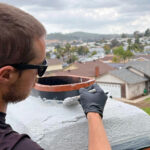
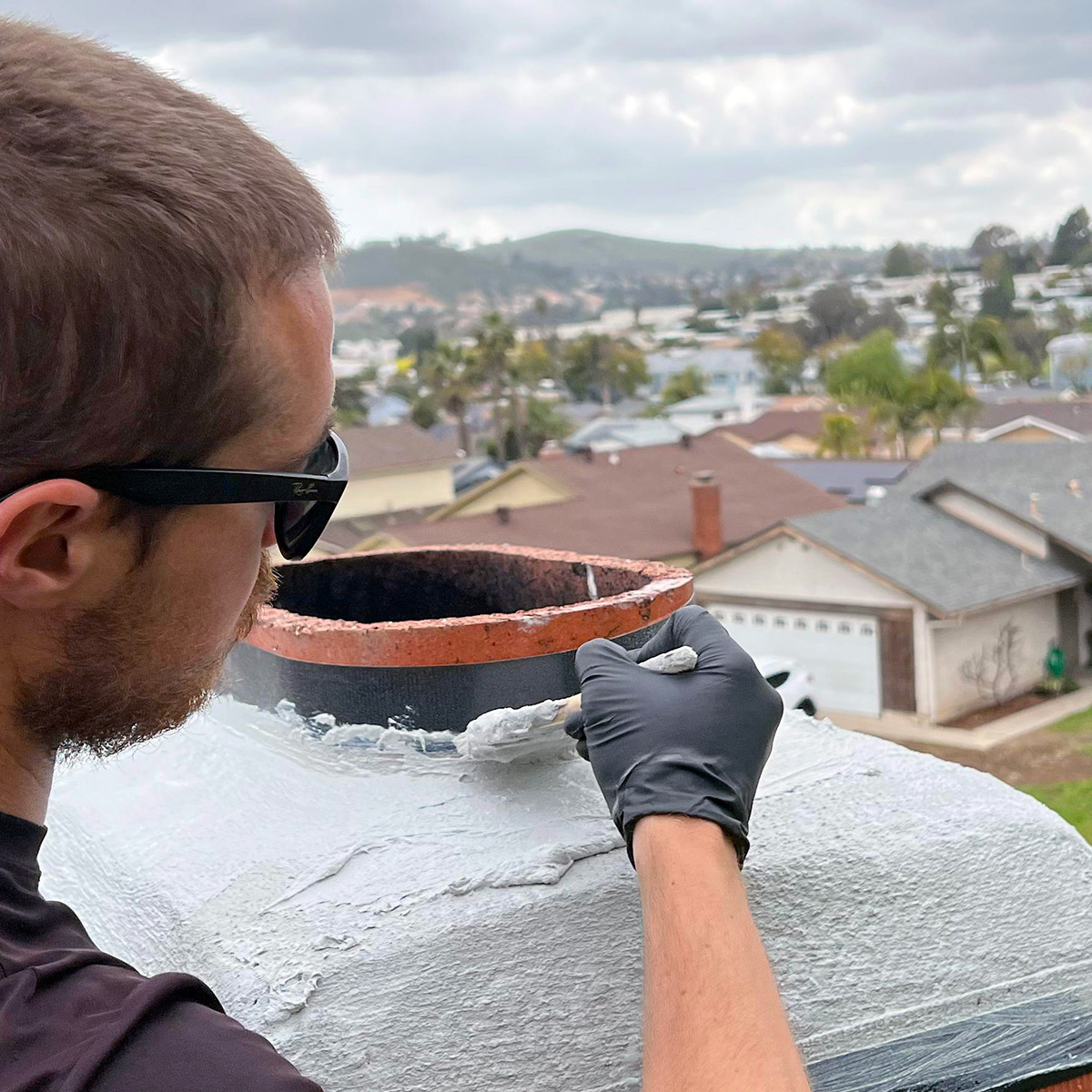
The chimney crown is the concrete slab covering the top of the chimney stack, which surrounds the open flue pipe. Its purpose is to protect the chimney’s interior from moisture, pests, and debris. Cracks in the crown allow rainwater to leak directly into the flue, soaking porous bricks and mortar joints. Without immediate repair, the damage can lead to rapid deterioration, mold, and structural failure.
Chimney Cap Vs. Chase Cover: What’s the Difference?
While both have similar functions, they are used on different types of chimneys:
- Chimney Caps are typically installed on masonry chimneys. Installed at the chimney top, they serve as an umbrella for the flue pipe that vents smoke and combustion byproducts. They should also have a strong mesh screen to keep out wildlife and debris and to prevent sparks from landing on the roof.
- Chase Covers are for use on pre-fabricated or wood-framed chases. Also referred to as a chase top or pan, it fits over the entire top of the chimney structure like a shoebox. The cover prevents water intrusion into the structure. Installing a chase cover also requires a rain collar and a termination cap that sits above the open flue pipe to keep rain, pests, and debris from entering and damaging the flue.
Signs Your Chimney Crown Needs Repair
Because the crown is located at the highest point of your home, damage often goes unnoticed until it’s too late. Watch for these red flags:
- Damaged or Missing Chimney Cap: A damaged cap or one blown off in a storm exposes the crown to the elements, which can lead to cracks.
- Visible Cracks: Even hairline fractures can cause water damage in the chimney structure.
- Spalling Bricks: If you see pieces of brick falling off the side of your chimney, it often indicates damage to the crown.
- Interior Moisture: Cracked tiles or condensation on the chimney liner is often traced back to cracks in the crown.
How to Repair Your Crown
For minor repairs, the chimney sweep cleans and fills surface cracks with a water-resistant elastomeric sealant. More severe damage often requires a complete rebuilding of the concrete crown.
Benefits of Evercrown®:
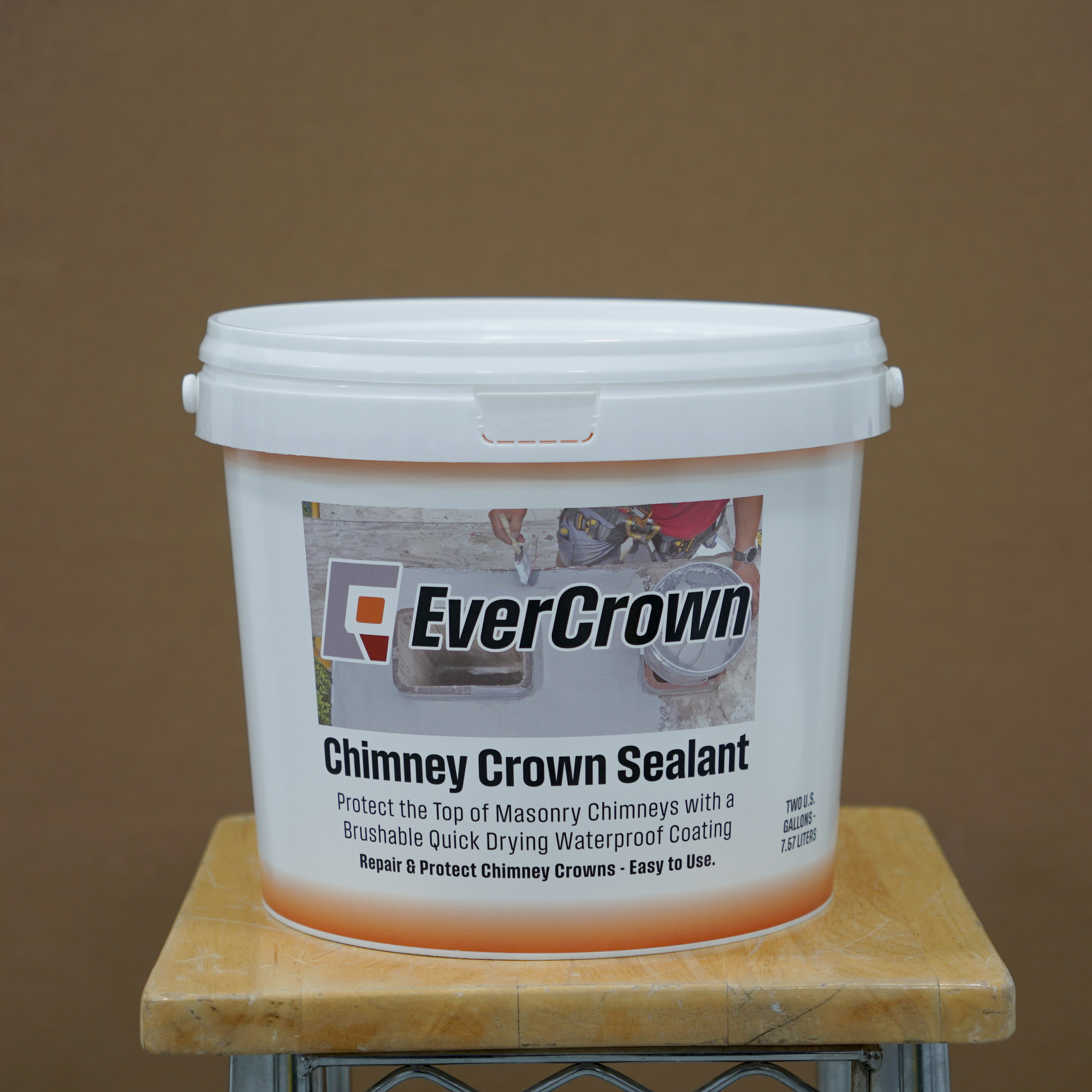
Evercrown® is a professional-grade coating formulated explicitly for making long-term, durable crown repairs. It offers:
- Unmatched Flexibility: Evercrown® is a proprietary bonding compound with rubber-like properties that withstands freeze-thaw cycles without cracking.
- Complete Waterproofing: It forms an impenetrable, seamless barrier that seals cracks up to 1/4″ wide.
- UV Resistance: While UV exposure affects the protective properties of many sealants, Evercrown’s advanced technology is engineered for long-term outdoor exposure.
- Cost-Effective: It goes on wet and dries fast, making application simple.
- 10-Year Warranty: It is backed by a 10-year limited warranty, providing peace of mind that your chimney and crown are protected season after season.
Where to Buy Evercrown® for Crown Repairs Near Me
Evercrown® is the fast, cost-effective option for repairing cracked masonry crowns. Developed by Approved Industries, a leader in advanced ceramic coatings, the proprietary formula provides complete weather protection and is backed by a 10-year limited warranty. Visit our website to find a certified installer near you and browse our complete line of advanced ceramic coatings and thermal protective systems.